Innovation Doesn’t Wait for the Big Ships to Turn
“If the rate of change on the outside exceeds the rate of change on the inside, the end is near.” — Jack Welch
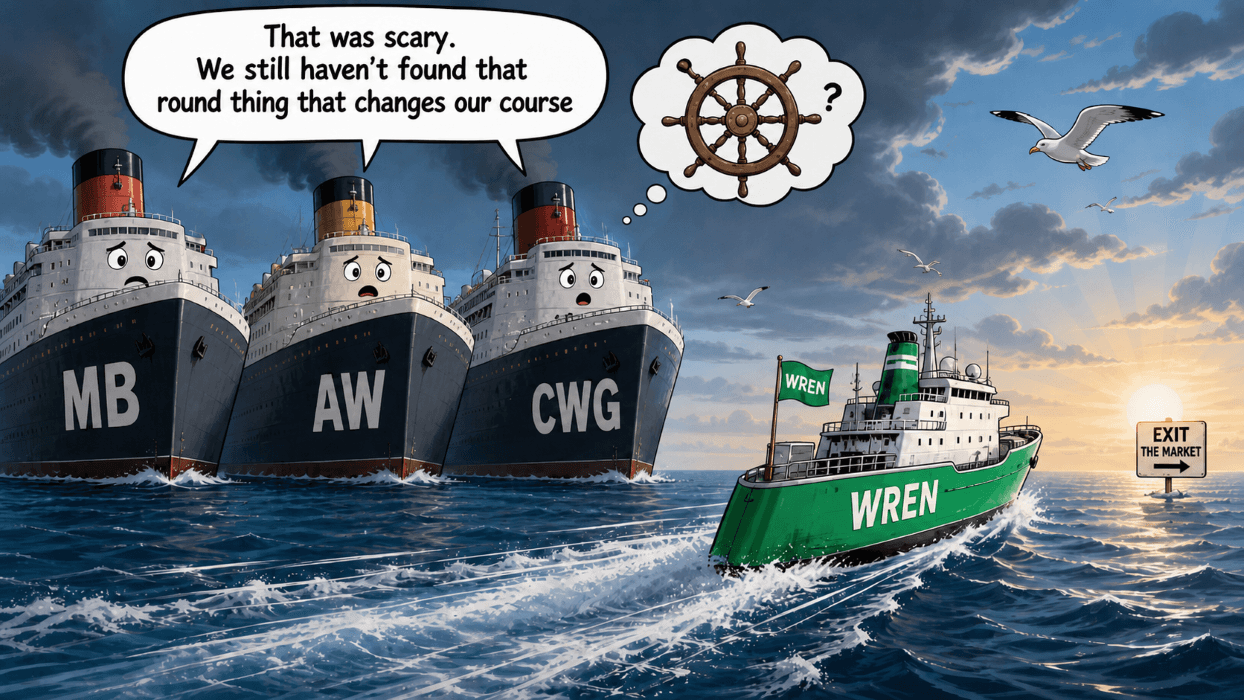
Wren Kitchens is going to be a case study for a while. I am spit balling here, but their investment probably passed 100M and maybe closer to 150M +. Ouch! You hope somebody learns something from that expensive lesson!
Not because they came into the U.S. with no vision. Quite the opposite. Wren had better technology than almost all of their competitors. They had slick showrooms, digital tools, scale, and a model that looked impressive on paper.
And yet, they still failed to capitalize on it.
Why?
Because even with better tools, they kept hitting the same nail with the wrong hammer.
The model they brought here wasn’t working well enough for this market, and more importantly, they didn’t adjust fast enough. That is the bigger lesson. Big ships may look powerful from the dock, but when market conditions change, consumer behavior shifts, or a new wave of technology rolls in, those ships take a very long time to turn.
That is exactly why the coming AI disruption is so interesting.
For the first time in a long time, smaller companies may be better positioned to adapt faster than the giants.
They can test new ideas faster.
They can shift processes faster.
They can adopt new tools faster.
They can respond to new customer expectations faster.
They can change course before the big players even finish scheduling the meeting about the meeting.
And if you are betting that the bigger Kitchen & Bath companies on this side of the pond are naturally better positioned to change quickly, you may want to check whether you’ve been in hibernation for the last 40 years.
The good news is you didn’t miss much change.
The bad news is there wasn’t much change.
I’m not talking about the glorious discovery of undermount glides. Woohoo. Parade the floats.
I’m talking about the actual business processes in this industry.
Lead comes in.
Designer gets buried.
Quote gets revised.
Mistakes sneak in.
Costs show up later.
Rework begins.
Customer experience suffers.
Everyone gets frustrated.
Nobody can quite explain where the profit went.
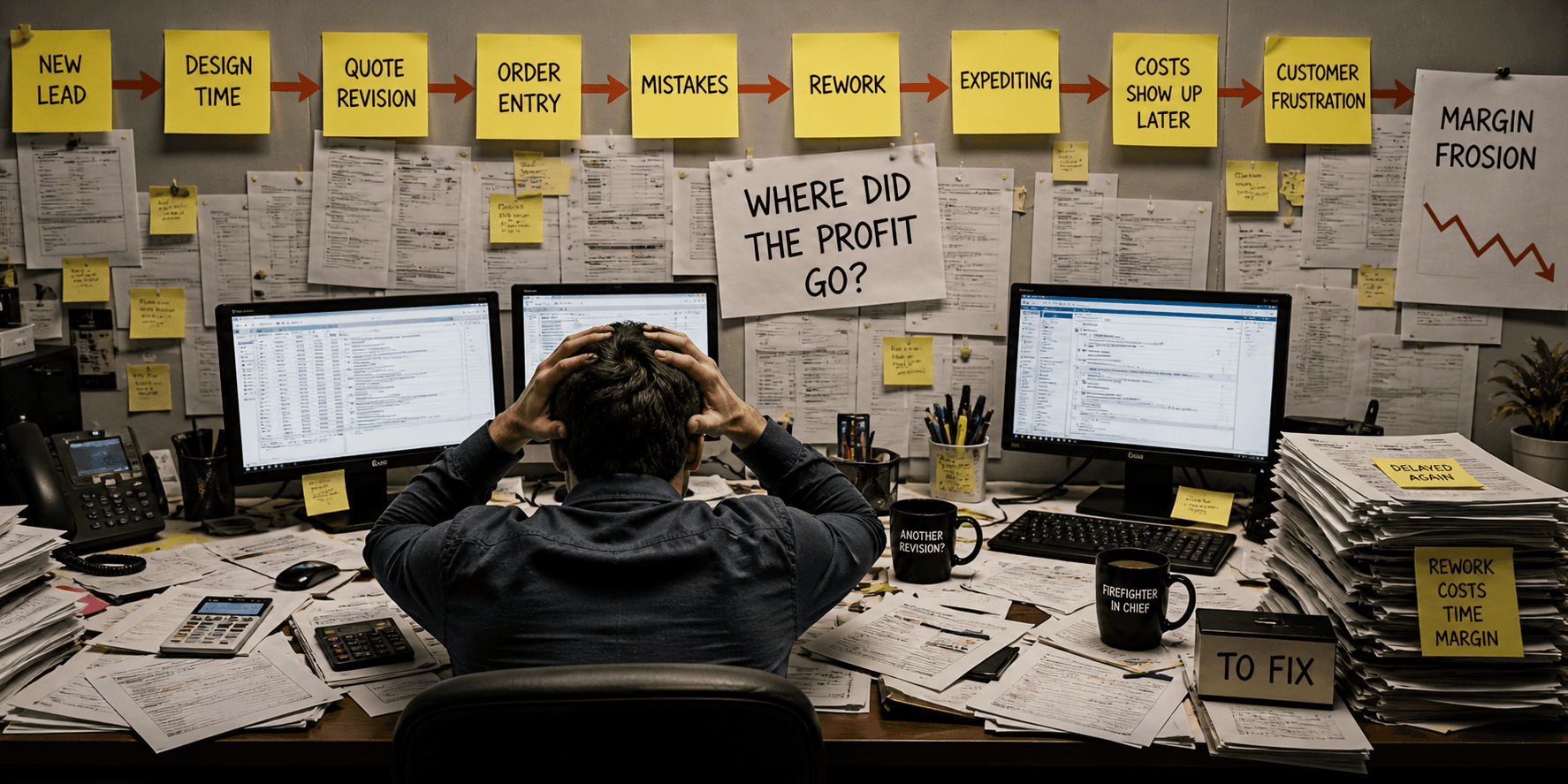
If our processes had really improved, we would not still be seeing dealers sitting at 3 points or more of margin erosion. That is an element that can quietly cost $30,000 for every $1 million sold, while also chewing up huge amounts of time and hurting the customer experience.
In many businesses, rework and correction can consume 40% of available time. That is not a small problem. That is a capacity killer.
And let’s be honest — it is pretty hard to improve something if you are not measuring it.
“Hey everyone, thanks for helping on the margin erosion problem. We don’t know if there were any real improvements, but we all feel better about it!”
That may be excellent therapy.
It is not a strategy.
Which brings me to one question:
Why on earth would a dealer not have teams using AI together inside the business?
Not one owner quietly poking around with it at night.
Not one designer using it to clean up an email.
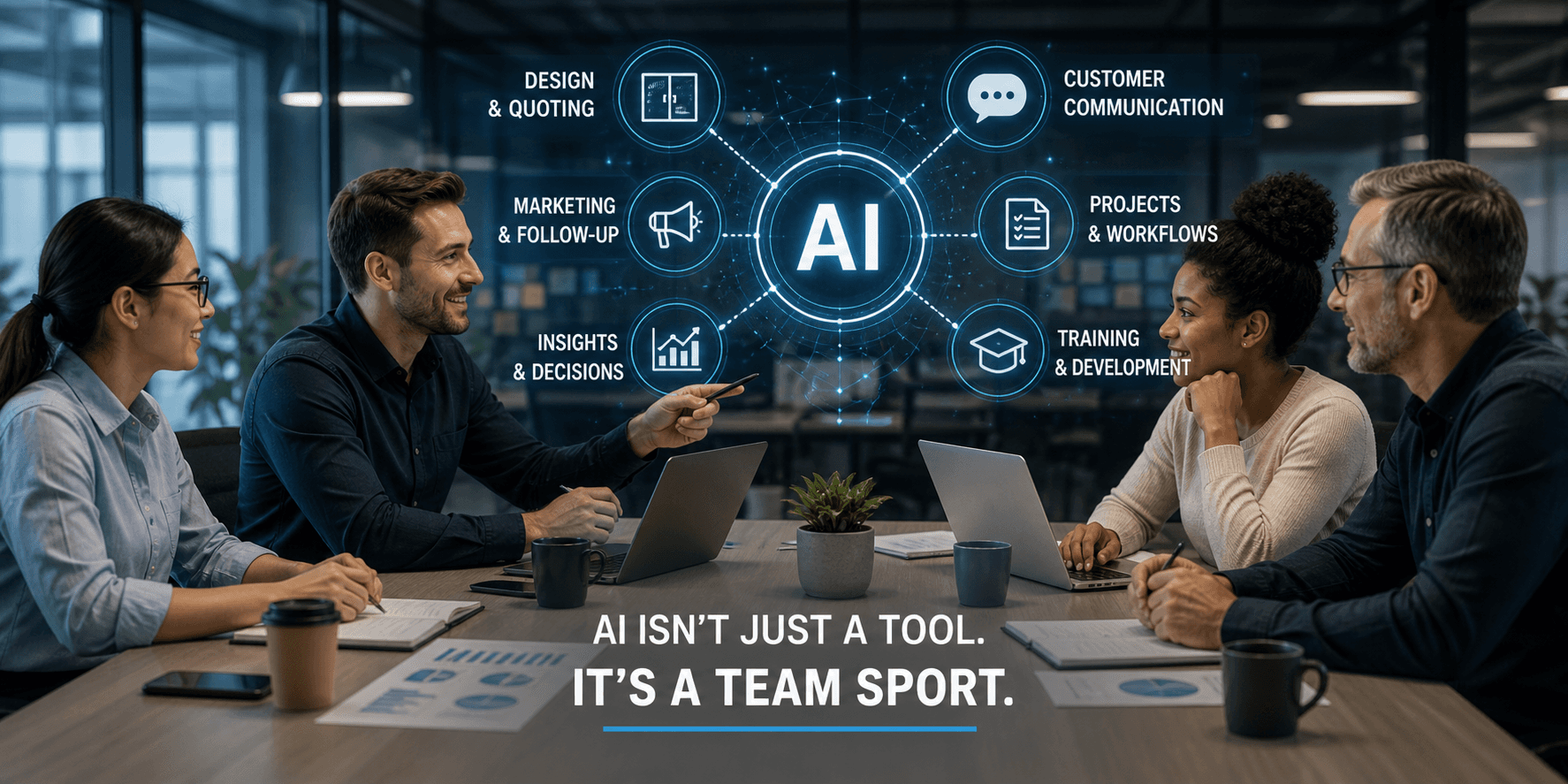
I mean the whole team connected around projects, processes, quoting, customer communication, training, marketing, follow-up, and problem-solving.
Yes, AI can absolutely be a waste of money.
But only if you buy seats for everybody, throw them the keys, and walk away.
That’s not an AI problem.
That’s a leadership problem.
Stick a new card in your hat called Business Innovation, and suddenly the world becomes your oyster. Start asking better questions. Start testing better workflows. Start measuring the leaks. Start sharing wins. Start building momentum.
Used correctly, AI is not just a tool. It becomes a team sport.
That is why this next stretch matters so much. The market news is pointing toward some very difficult times ahead. Pressure will increase. Customers will change. Margins will tighten. The companies that can learn and adapt faster are going to be the ones that survive and gain share.
The encouraging part is that some movement has already started. Reps are leaning in to learn more about AI and how it can help their customers. Dealers in Elevate are stepping up, too.
That’s good.
Because it may be time to get those AI sandbags in place before the storm.

The next wave will not reward the biggest company. It will reward the most adaptable one.
And if we’re lucky, somewhere along the way, someone might even come out with an all-plywood box.
Until then?
It’s time to get on the stick. thad


